For ISAs
For ISAs and telemarketers
An inside sales agent makes more calls before lunch than most agents make in a week, and is usually doing it in software designed for somebody else. The dialer is a separate subscription, the qualifying notes go somewhere the agent will not read, and the handoff is an email. ProspectKeeper models the calling role as a real one.
Qualified, then dropped
The ISA does the hard part: eighty dials, six conversations, one person who is genuinely moving in the spring and cares about the school catchment. Then that becomes a line in an email to an agent, who calls two days later and opens with a question the lead already answered. The lead notices. What was lost was not the contact detail — it was everything the ISA learned, which never had anywhere to live except the sentence they had time to type.
Why ProspectKeeper for this
All of it ships today on ProspectKeeper Connect at $99/month — and the pipeline itself is free to start on, for as long as you like.
The dialer is in the product, not a second subscription
Calling runs in the browser from the client's record, with recording, voicemail and a transcript attached automatically. The heaviest phone user in the business is not the one person being asked to work across two tools.
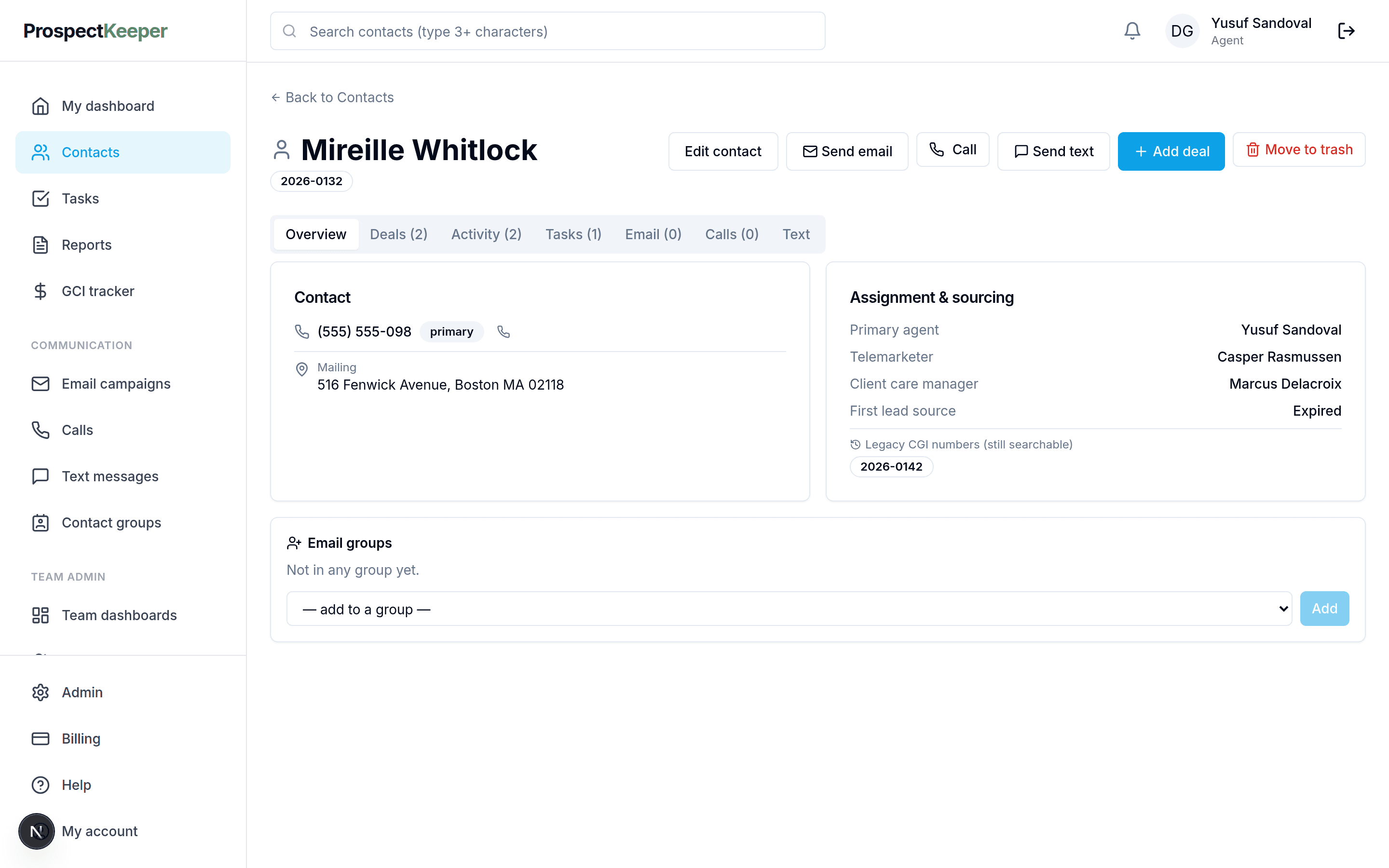
A queue, not a list you keep your place in
Today, upcoming and overdue follow-ups, each naming its client and its owner. An ISA's day is a queue — the useful question is who to ring next, and it should not require re-sorting a spreadsheet at nine each morning.
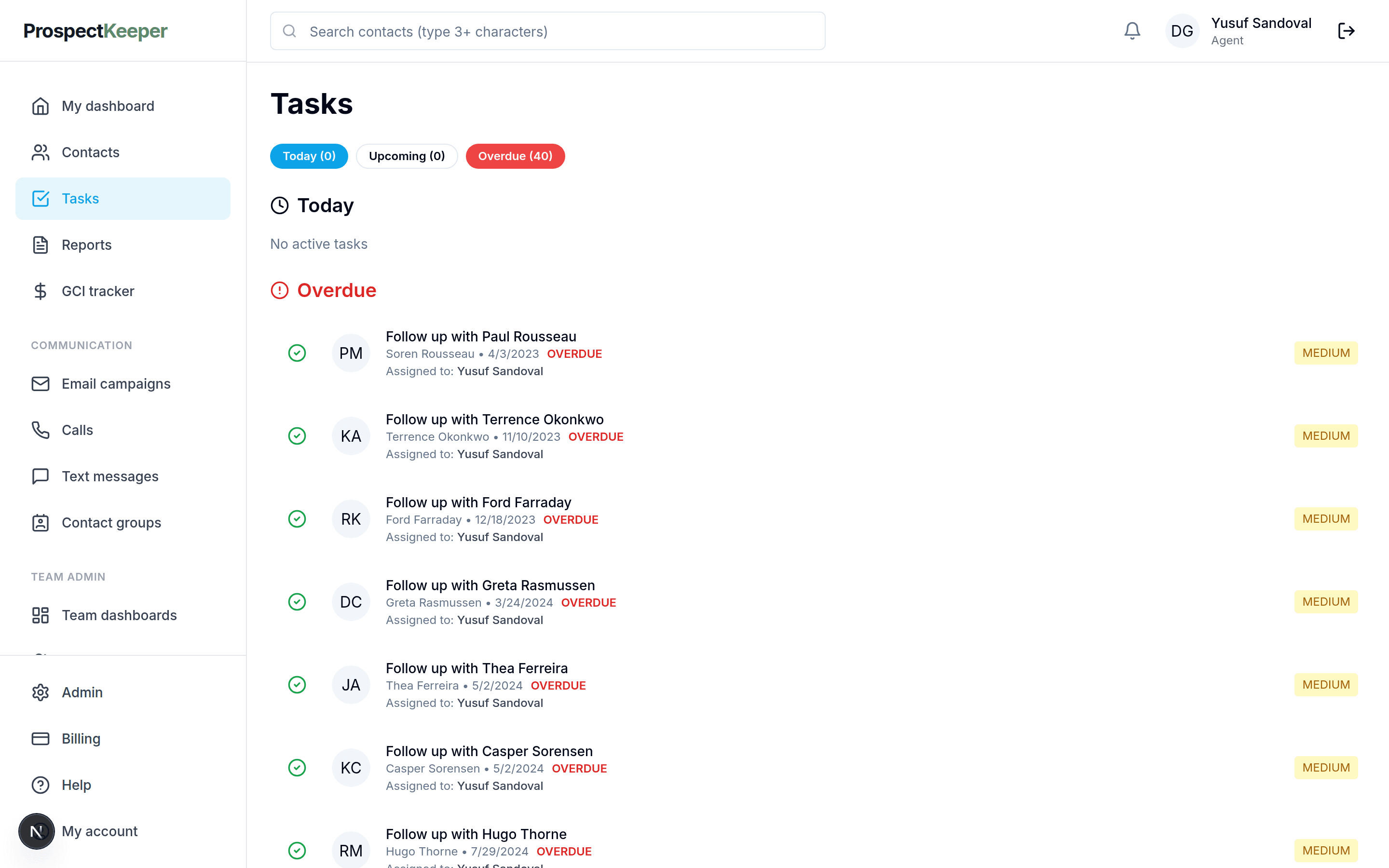
Telemarketer is a role with its own dashboard
The four people who touch a deal — telemarketer, agent, client care manager, closing coordinator — are modelled as roles on the record, each with their own view and their own assignment defaults. The ISA is not an agent account with fewer permissions.
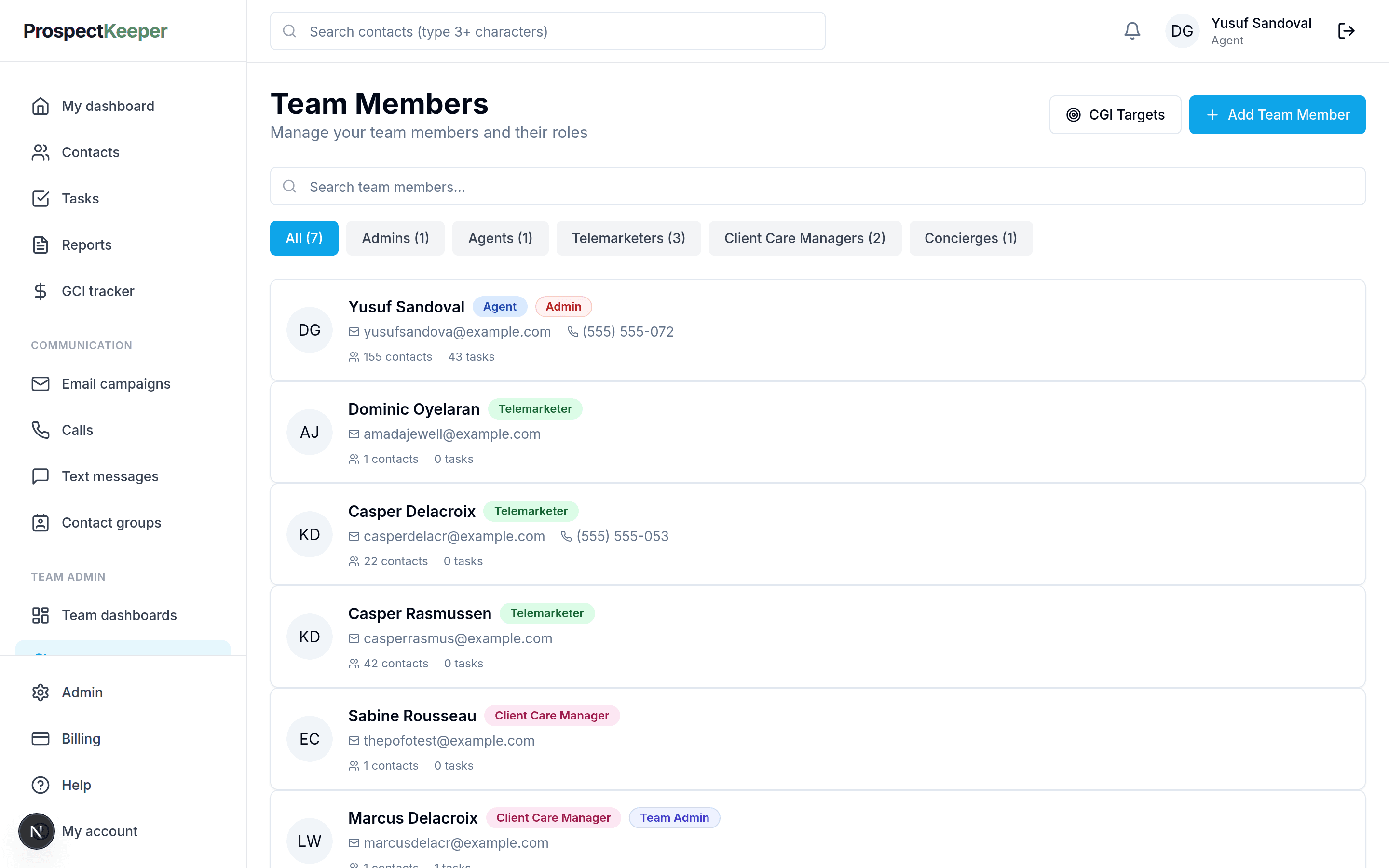
The handoff carries the conversation, not a summary
When the lead goes to an agent, the recording, the transcript and every note go with it, because they were filed against the client rather than written up afterwards. The agent opens the record and knows what was actually said.
How it works
From nothing set up to using it on a Tuesday.
Set the ISA up with the telemarketer role
Roles are assigned on the team roster and decide what each person sees, what lands on their dashboard, and what gets assigned to them by default.
Provision a number and fund the wallet
Calling needs a company number — a one-time setup fee covers provisioning and registration — and minutes draw from the prepaid balance as they are used.
Work the queue
Open the tasks screen, take the calls that are due, dial from each record. Duration, outcome, recording and transcript are written back without anyone typing them.
Qualify onto the record, not into an email
Notes, the stage change and the next follow-up go on the client. That is the handoff artefact — there is no separate write-up whose quality depends on how the last call went.
Assign to the agent
Reassign the client and the whole history moves with it, because it never belonged to the ISA's handset in the first place.
What the calling seat stops needing
An ISA is usually the person paying for the most tools and getting the least designed experience. Most of that stack exists to move information between two systems that should have been one.
A per-seat dialer licence
Calling is part of the plan; the minutes are metered from a shared prepaid balance.
The call-log spreadsheet
Outcome, duration and recording are written to the client record as the call ends.
The handoff email
The agent reads the record, including the transcript, rather than a summary of it.
A second contact database
The ISA and the agent work the same records, so nothing has to be kept in step.
What it does not do
Worth knowing before you spend a week moving in. A switcher finds these in the first fortnight anyway, and hearing them from us first is cheaper for everyone.
- There is no unattended power dialer that walks a list on its own — calls are placed one at a time from a record or a queue.
- There is no built-in qualifying-script builder; scripts live wherever your team keeps them today.
- Lead routing is by assignment and role defaults rather than a rules engine with round-robin distribution.
- ProspectKeeper does not supply leads. It is the system for working the ones you already have.
- Call lists come from the contacts you bring in from a spreadsheet or add in the app; no lead vendor feeds them in.
Questions
Is there a seat licence for an ISA?
Seats are priced the same whoever sits in them, and calling is part of the plan rather than a dialer add-on. Usage is metered from the shared prepaid balance, so a heavy calling seat costs more in minutes than a light one without needing a different plan.
Can an ISA see everything an agent sees?
Roles decide it. A telemarketer gets their own dashboard, their own queue and the records assigned to them, which is generally what you want — the calling seat should see the people it is calling rather than the whole book.
How does the agent find out a lead is ready?
Reassign the client to them, and it appears on their dashboard with the full history attached — calls, recordings, transcripts, notes and the follow-up date the ISA set. The handoff is the record changing hands, not a message about it.
Are the calls recorded?
Recording, voicemail and transcripts are part of the call and attach to the client. That is worth more for an ISA than anyone, because the detail that qualifies a lead is usually a sentence nobody would have thought to write down. Check the consent rules for your state first.
Can two ISAs work the same pipeline?
Yes — assignment is per record and the tasks screen names the owner of each follow-up, so two people working the same stage do not collide over who is calling whom.
Does it dial a list automatically?
Calls are placed one at a time from a record or a queue, with the filing handled for you. An unattended power dialer that walks a list on its own is not part of the product today.
Read next
Try it against your own pipeline
Free to start. Set up your company, add your clients and work the list.